
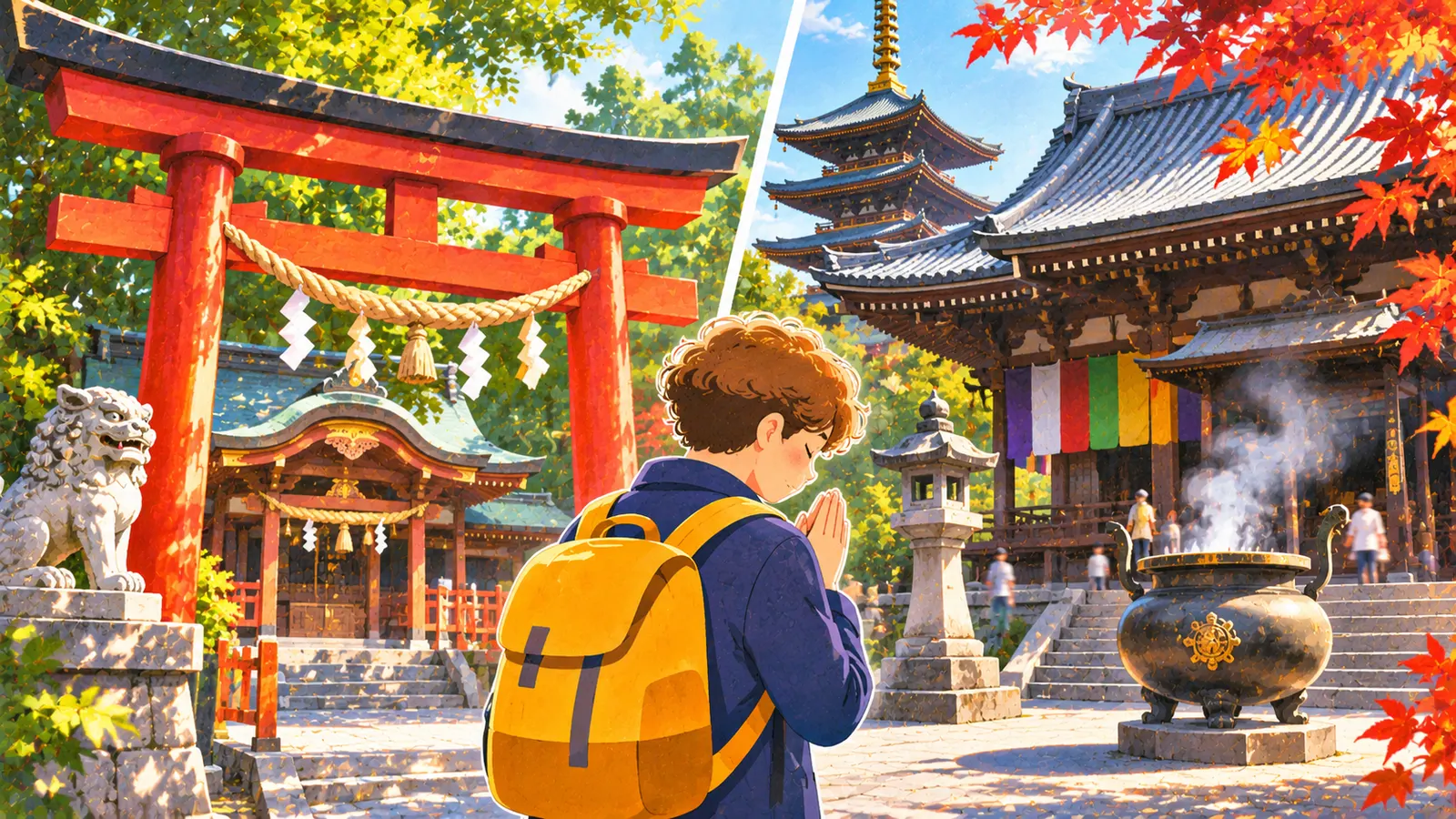
Shrines & temples
Shrines are Shinto and temples are Buddhist. Shrines have torii gates; temples have big gates, incense and often pagodas. The way you pray is different at each.
What is the difference?
Shinto is Japan's native belief in kami, spirits found in nature, places and ancestors. A shrine (jinja) is marked by a torii gate, often red, with a purification basin and a main hall.
Buddhism arrived from the Asian mainland. A temple (tera) has a large gate, a main hall with Buddha statues, an incense burner and sometimes a pagoda. Many Japanese people visit both.
How to pray at a shrine and a temple
- Bow at the gateBow lightly before passing the torii or temple gate.
- Purify your handsAt the water basin: rinse your left hand, right hand, then pour water into your left hand to rinse your mouth. Don't drink from the ladle.
- At a shrine: 2 bows, 2 claps, 1 bowPut a coin in the box, ring the bell, bow twice, clap twice, pray, then bow once.
- At a temple: no clappingPut a coin in the box, put your hands together quietly, pray and bow.
- Incense at templesWave the incense smoke toward you; it is said to bring good health.
Do and don't
Japanese you will see
Find shrines and temples
Search the way locals do. Results open in Japanese with a map.
Area guides: Kyoto Station · Asakusa · Ise
Questions
Can non-Japanese people pray?
Yes. Visitors are welcome to pray respectfully.
How much should I offer?
Any coin is fine. A ¥5 coin is popular because 'go-en' sounds like 'good connection'.