
Sento
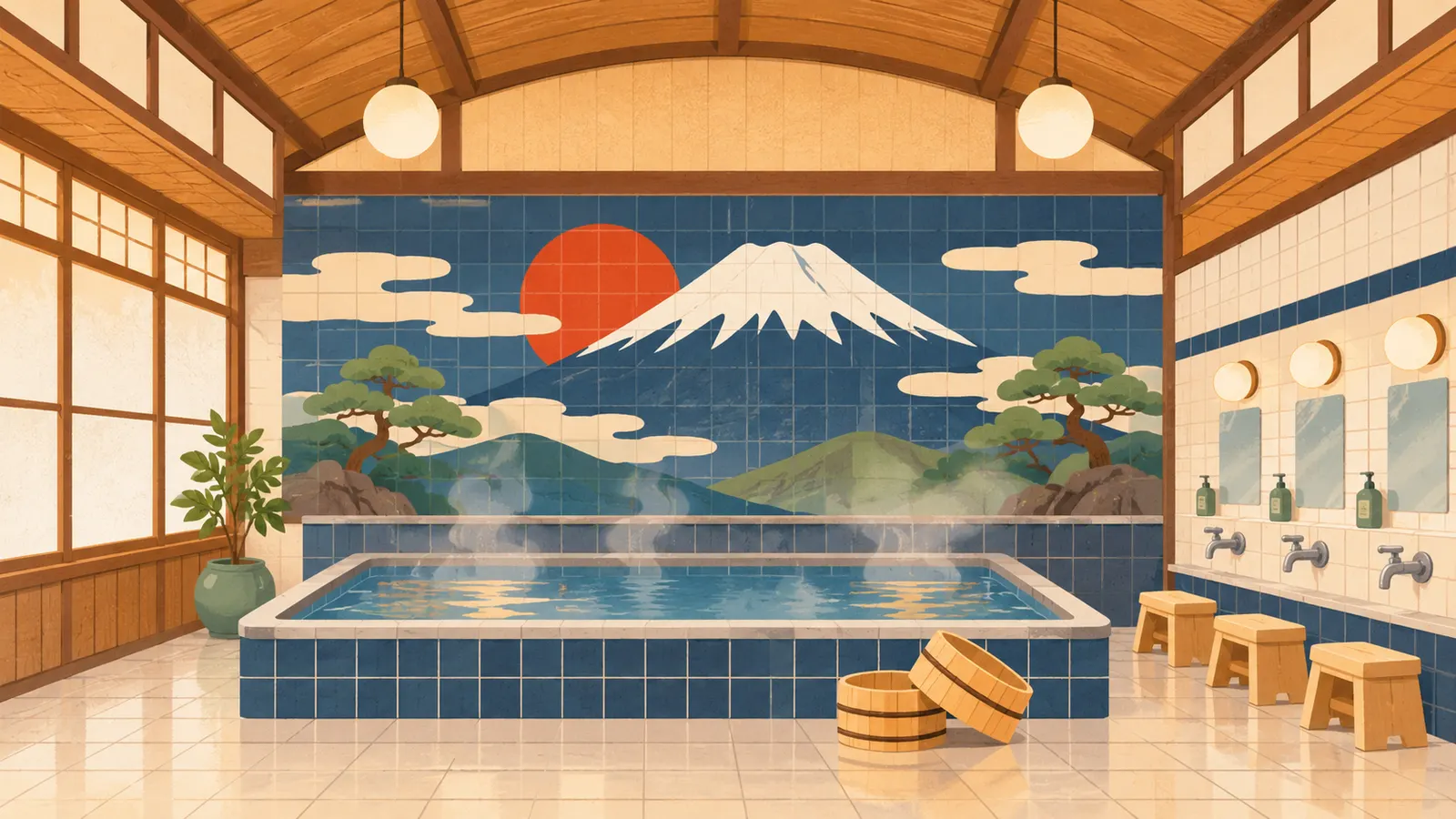
A sento is a local public bathhouse: big hot baths, a Mt Fuji mural on the wall, and a flat price set by the prefecture. It is cheap, relaxing and one of the most local things you can do in Japan.
What is a sento?
Sento were built so that people without baths at home could keep clean, and they are still part of daily life in many neighbourhoods. The entry price is capped by each prefecture's governor, so almost every sento in the same prefecture charges the same.
Inside you will find separate sides for men and women, a changing room with lockers, rows of washing taps with small stools, and one or more big baths. Many have a painted mural of Mt Fuji above the bath. Some also have a sauna, a cold bath or an electric bath (a mild buzzing current; skip it if you have a heart condition).
How to use a sento, step by step
- Put your shoes in a shoe lockerTake your shoes off at the entrance and lock them in a small locker. Keep the wooden or plastic key.
- Pay at the front deskPay at the counter (bandai) or a ticket machine. You can usually rent a towel and buy small soap and shampoo here.
- Go to the right sideMen and women bathe separately. Look for the curtain (noren): 男 or ゆ in blue is often men, 女 or ゆ in red is often women. Ask if unsure.
- Undress completelyPut everything in a locker in the changing room. You go into the bath area naked, taking only a small towel.
- Wash first, sitting downSit on a stool at a tap and wash your whole body and hair. Rinse off all the soap before you go near the bath.
- Soak quietlyGet in slowly. Keep your small towel out of the water: rest it on the edge or fold it on your head.
- Dry off before the changing roomWipe yourself with the small towel before stepping back into the changing room, to keep the floor dry.
- Finish with a cold drinkA bottle of milk or coffee milk after the bath is a classic sento tradition.
Do and don't
Japanese you will see
Find a sento
Search the way locals do. Results open in Japanese with a map.
Area guides: Asakusa · Shibuya · Kawaramachi · Tenma
Questions
Can I go to a sento with tattoos?
Usually yes. The national bathhouse union has said it does not refuse people with tattoos and has no rule against them. Super sento and onsen resorts are different: many still refuse tattoos, so check each place.
Sento, super sento or onsen: what is the difference?
A sento is a small neighbourhood bath with a fixed, cheap price. A super sento is a bigger leisure facility with many baths, restaurants and higher prices. An onsen uses natural hot spring water.
Can children go into the other parent's side?
In Tokyo, children aged 7 and over cannot enter the bath of the opposite sex. Younger children can go in with a parent.
Do I need to bring a towel?
It helps, but most sento rent or sell small towels at the front desk.