
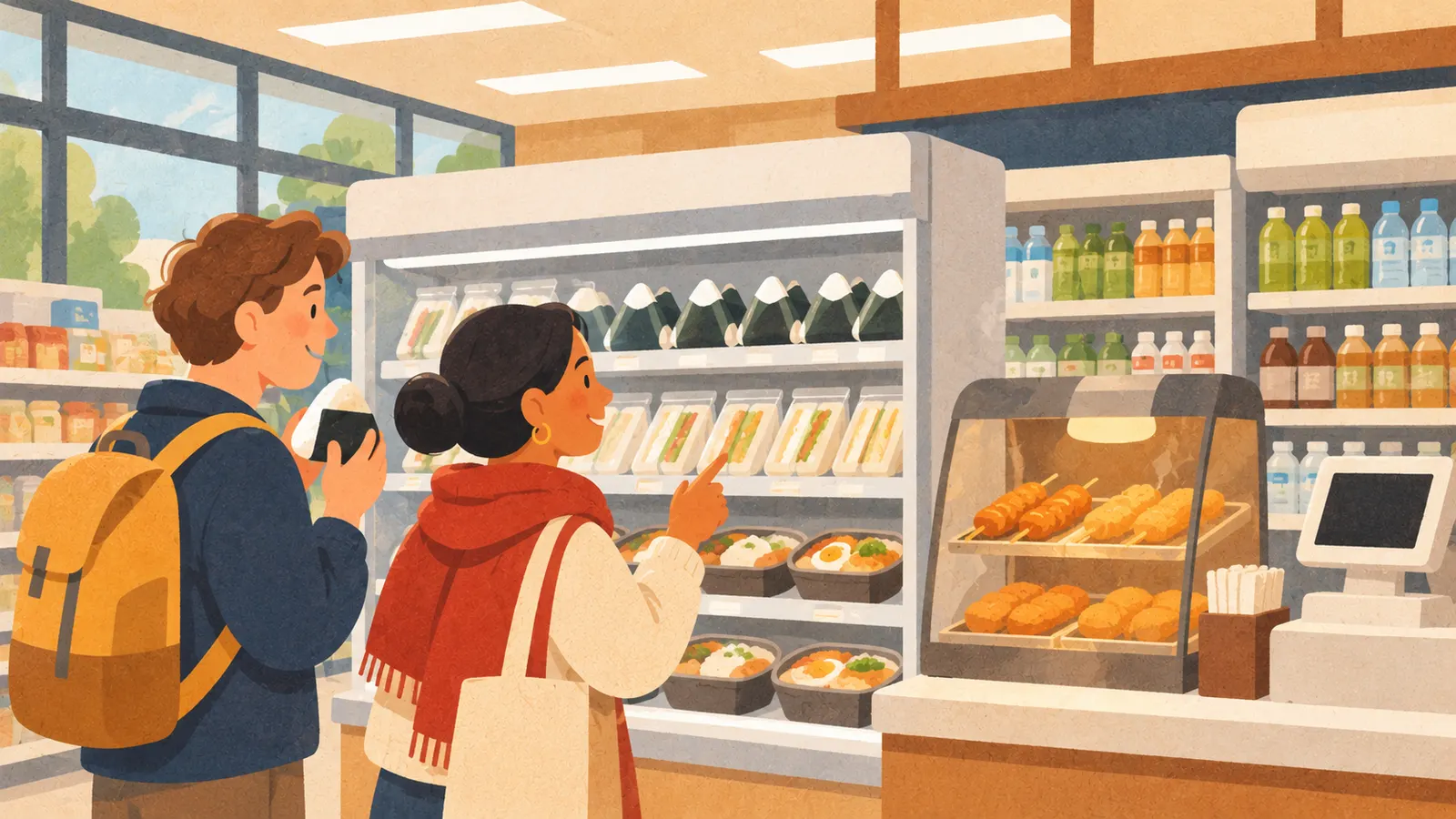
Konbini
Japan's convenience stores are open around the clock and sell surprisingly good food: rice balls, sandwiches, hot snacks and bento. They also have ATMs, toilets, printers and parcel services.
What is a konbini?
Konbini are everywhere in Japan, and locals use them for breakfast, lunch and late-night snacks. Food is restocked several times a day and changes with the seasons.
Staff will heat bento and pasta for you, and hot snacks like fried chicken are kept by the register. Many stores also have a coffee machine, free Wi-Fi, a copy and print machine, and a small seating area.
How to shop at a konbini
- Pick your itemsChilled food is along the walls; hot snacks are by the register.
- Ask for heatingStaff will ask 'atatamemasu ka?' (heat it up?). Say 'hai' (yes) or 'iie' (no).
- Point at hot snacksOrder fried chicken or steamed buns by pointing at the case.
- PayUse the screen to choose cash, card or IC card. Put cash on the tray.
- Take chopsticks or a spoonStaff often ask if you want them. Bags cost a few yen.
Do and don't
Japanese you will see
Find a konbini
Search the way locals do. Results open in Japanese with a map.
Questions
Can I withdraw cash at a konbini?
Yes. Many konbini ATMs accept foreign cards; look for the card logos on the machine.
Can I eat inside?
Some stores have an eat-in corner. Tax is higher for eating in than taking away.